





Pool Building Mistakes in Costa Rica: 7 Issues and How to Avoid Them
Dream Pool Design Costa Rica
Share this:
Building a pool is a significant investment. In Costa Rica, however, it’s common to see projects develop issues shortly after completion. In most cases, it isn’t “normal use” that causes problems—it’s mistakes in planning, design, or on-site execution.
The good news: most of these failures are preventable when the right decisions are made from the start.
The Most Expensive Pool-Building Mistakes in Costa Rica
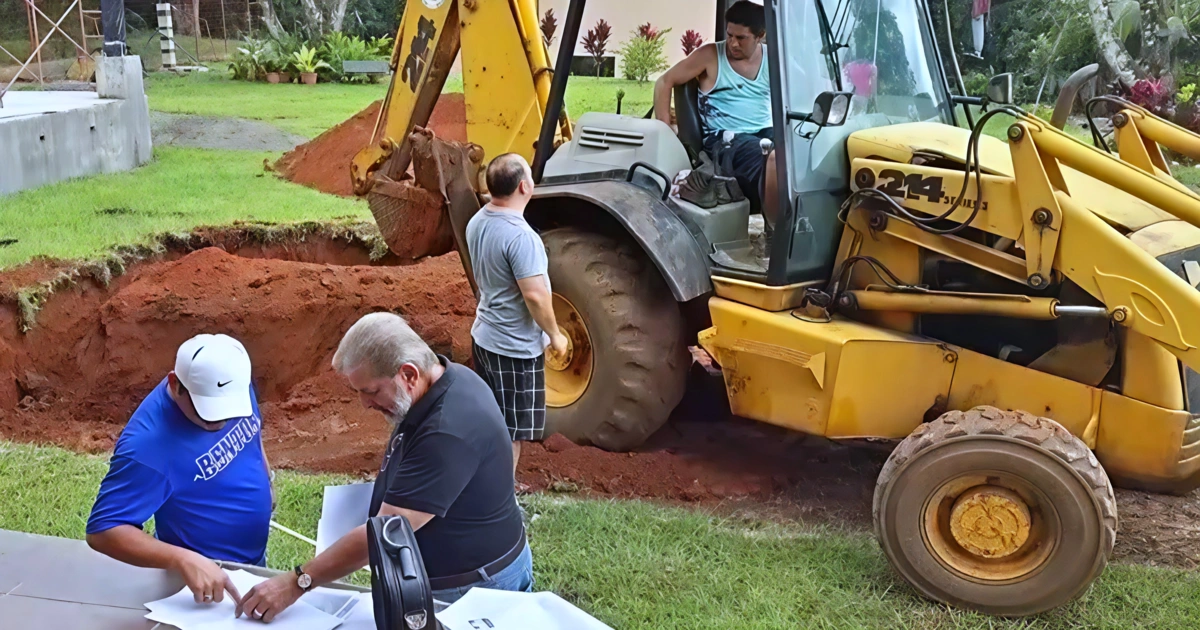
Mistake 1 — Skipping a proper site and soil assessment
Across Costa Rica, many properties involve slopes, fill areas, variable soil behavior, and zones with high moisture levels (depending on location). Building without a technical assessment can lead to:
- Settlement
- Structural cracking
- Drainage problems around the pool
How to avoid it: request a technical site evaluation and define the structural solution before excavation begins.
Mistake 2 — Designing without Costa Rica’s tropical climate in mind
Ignoring heavy rainfall and constant humidity often results in:
- Soil saturation and damage to surrounding areas
- Sediment and organic debris entering the pool
- Premature finish deterioration when materials aren’t selected correctly
How to avoid it: incorporate perimeter drainage, correct slopes, properly defined elevations, and protection for technical areas from the design stage.
Mistake 3 — Choosing materials not suited for outdoor humidity
Poor “savings” become expensive when you end up with:
- Finishes that stain or delaminate
- Low-quality grout, joints, and seals
- Components that age quickly in humid environments (and faster near the coast)
How to avoid it: use pool-rated materials designed for tropical conditions and prioritize installation quality—not just the product itself.
Mistake 4 — Weak or poorly executed waterproofing
Many leaks don’t come from the “concrete”—they come from:
- Poorly resolved details (joints, transitions, pipe penetrations)
- Incorrect products or improper application
- Lack of testing before closing and finishing
How to avoid it: require a proper waterproofing system and quality checks/testing before installing final finishes.
Mistake 5 — Undersizing the hydraulic system
A poorly calculated system typically causes:
- Cloudy water or weak circulation
- Higher electricity consumption
- More frequent maintenance routines
In Costa Rica—where rain and organic load (leaves, dust, sediment) are common—equipment must be sized with real criteria.
How to avoid it: size pumps, filters, and circulation based on actual volume, intended use, and the hydraulic design—not generic rules of thumb.
Mistake 6 — Not planning maintenance from the design stage
Many pools look great but become difficult and expensive to operate because of:
- Poor access to equipment
- Insufficient technical space
- Hard-to-clean or poorly drained areas
How to avoid it: plan the equipment room, access, drainage, circulation, and cleaning workflow from the design stage—based on day-to-day operation.
Mistake 7 — No technical supervision during construction
Even with a strong design, execution determines results. Without supervision, you often see:
- Unjustified changes
- Errors in hidden installations (hydraulic/electrical)
- Level and slope deviations
How to avoid it: ensure technical supervision and quality control during critical phases (structure, hydraulics, waterproofing, and finishes).
How to prevent these mistakes in practice
- Work with pool specialists—not general contractors alone
- Require detailed planning (scope, drawings, specifications)
- Use suitable materials with proper technical support
- Consider future operation and maintenance from day one
- Avoid improvising changes during construction
Final recommendation
Most pool problems aren’t inevitable—they come from wrong decisions at the start. In Costa Rica, a pool that’s properly planned from day one is a safer, longer-lasting, and easier-to-maintain investment.

Helpful guides
Continue with these articles to make smarter decisions on design, equipment, and maintenance.