





Pool Maintenance in Costa Rica: Design Decisions That Make It Easier
Dream Pool Design Costa Rica
Share this:
One of the most common mistakes when building a pool is treating maintenance as a secondary issue. In reality, maintenance starts at the design stage—and many decisions made early on determine how much time, money, and effort the pool will require for years.
In Costa Rica, where tropical conditions and year-round use put more demand on the system, designing for operation is not a luxury—it’s a smart way to protect your investment.
Why design determines pool maintenance
A poorly designed pool often:
- Requires more frequent cleaning
- Uses more energy
- Develops repetitive water issues (cloudiness, algae, instability)
- Increases operating and service costs
A pool designed with maintenance in mind, on the other hand, is easier to run day to day, reduces mistakes, and avoids expensive corrective work.
Design decisions that reduce maintenance and long-term cost
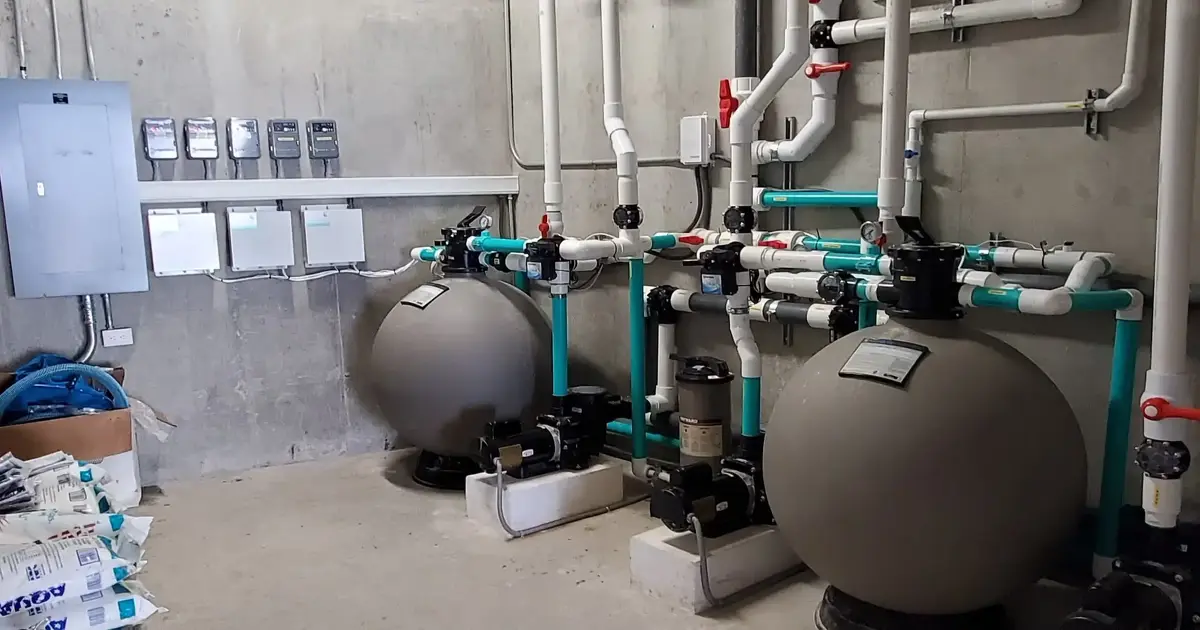
1) Equipment placement and the equipment room
Access to equipment should be:
- Convenient (for inspections and adjustments)
- Safe
- Well-ventilated and protected from humidity
What happens when this is done poorly: service becomes harder, repairs become more expensive, and maintenance gets delayed—eventually affecting water quality and equipment performance.
2) Proper hydraulic sizing
A correctly sized system:
- Keeps water more stable
- Reduces the need for frequent chemical corrections
- Optimizes electricity consumption
Undersizing filtration and circulation is one of the most common causes of “never-ending maintenance.”
3) Shape and depth designed for real-world cleaning
Designs with:
- Unnecessary corners
- Narrow areas that are hard to brush
- Abrupt depth changes
- Dead zones where circulation is weak
tend to trap dirt and require more work.
Practical rule: what looks great in photos should also be easy to clean—and perform consistently week after week.
Materials and finishes: maintenance is won or lost here
Easy-to-clean finishes
In Costa Rica, it’s smart to prioritize:
- Surfaces resistant to humidity and UV exposure
- Materials that perform well against algae and staining
- Durable finishes (installed correctly)
This reduces deep-cleaning frequency and prevents premature wear.
Joints, seals, and well-executed details
Low-quality sealing—or poor installation—often causes:
- Leaks
- Staining
- Repetitive repairs
Many times, the issue isn’t the pool itself—it’s the details where execution failed.
Systems that simplify maintenance
Basic automation (when it makes sense)
Automation can help:
- Control filtration schedules
- Reduce human error
- Keep parameters more consistent
While it requires an initial investment, it often improves stability and reduces the cost of corrections over time.
Lighting and accessories suitable for humid environments
Choosing correctly helps reduce:
- Frequent replacements
- Electrical failures
- Downtime and interruptions
In humid climates, installation quality and sealing are critical.
Costa Rica’s climate: what increases maintenance load
Rain, leaves, dust, and a natural environment increase system demand. That’s why it helps to:
- Design efficient perimeter drainage
- Protect the immediate area (smart landscaping, natural barriers)
- Consider strategies such as covers or control solutions based on location and intended use
Common mistakes that make maintenance more expensive
- Designing without service access in mind
- Choosing equipment based on price instead of capacity/efficiency
- Ignoring local climate conditions
- Not defining real usage (residential, rental, condominium)
These mistakes lead to ongoing costs and frustration.
Final recommendation
A well-designed pool doesn’t just look better—it’s easier and more affordable to maintain. In Costa Rica, planning for maintenance from the design stage is a smart decision that protects your investment for the long term.
Helpful guides
Continue with these articles to make smarter decisions on design, equipment, and maintenance.