





Pool Types in Costa Rica: Practical Guide
Dream Pool Design Costa Rica
Share this:
Choosing a pool type is more than picking a shape or size. It’s about selecting a solution that fits your lifestyle or your project’s operation (home, vacation rental, condo, or hotel). When the pool type is defined early, design decisions become smoother and costly changes to plans, equipment, and finishes are easier to avoid.
This guide organizes pool types in two ways: by function (what the pool is designed to do) and by operation (how it will be used day to day). That makes it easier to compare options and choose with confidence.
1) Pool types by function
Recreational pools (family & social use)
The most common option. Designed for enjoyment—swimming, relaxing, playing, and spending time together.
What to define
- Comfortable areas: steps, benches, and resting zones.
- Practical depths based on users.
- Access and circulation that support safety and easier cleaning.
Best for
Projects where daily enjoyment and comfort are the priority.
Resort-style pools (experience + design impact)
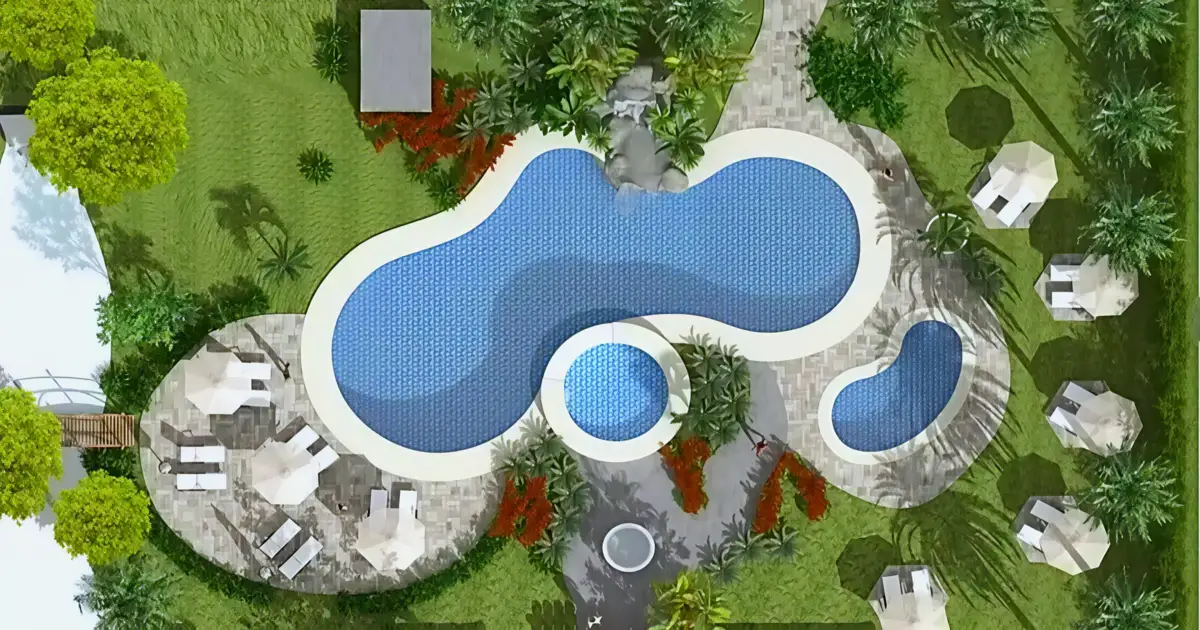
Here, design is part of the value. These pools often include wide steps, shallow lounge areas, and a refined “water mirror” look.
What to define
- User experience (social and lounge areas).
- Lighting and overall composition.
- Stable operation to keep water consistently ready.
Best for
Premium homes, vacation properties, and experience-driven projects.
Infinity pools
Chosen for the horizon-edge effect. They can be stunning, but require precise technical execution for stable overflow and consistent water level.
What changes
- A more demanding overflow/recirculation system.
- Level control and precise construction tolerances.
- Details that keep the infinity effect reliable.
Best for
View lots and design-first projects.
Lap pools (training-focused)
Designed for lane swimming and training. Here, usable length, geometry, and water behavior matter more than freeform shapes.
What to define
- Target length (often 25 m or 50 m depending on goals).
- Lane layout and functional widths.
- Depths, starts, and safety on wet edges.
Best for
Sport-focused homes, clubs, training centers, and developments that offer lap-swim amenities.
Note: if your project targets formal training or competition parameters, it should be defined early so design can align with applicable sports standards and project requirements.
Spa & wellness pools (as a complement)
Includes integrated spas, benches, jets, and relaxation zones. A great add-on to a main pool.
What to define
- Ergonomics (seating, access, depth).
- Safety on wet surfaces.
- Comfort-focused operation based on expected use.
Best for
Residential and vacation projects looking to elevate relaxation.
Entertainment pools (high traffic)
Designed for continuous use and higher bather loads, common in clubs and recreational facilities.
What to define
- Safer surfaces (slip resistance where needed).
- Robust circulation/filtration planning.
- Layout that supports supervision and safer use.
Best for
High-use environments where durability and safety are key.
2) Pool types by operation (real-world use)
Residential pools
More flexibility and customization aligned with a household’s routine.
Key focus
Plan for practical operation: access, circulation, cleaning, and comfortable zones.
Vacation rental & Airbnb pools
Not “just another home pool.” They see rotating users and must be easy to operate.
Key focus
Durable solutions and simple operation to keep water ready with consistent routines.
Condo pools
Shared use means more users, longer hours, and higher maintenance and safety demands.
Key focus
Design the equipment room, access, ventilation, and service logistics from day one.
Hotel & resort pools
The pool is a major part of guest experience and the property’s perception.
Key focus
Operational continuity, safety, and a design aligned with the hotel concept.
3) Quick checklist to choose better
- What’s the main function—recreational, resort, infinity, lap/training, or spa?
- Who will use it, and how intense will use be (home, rental, condo, hotel)?
- How consistent will real maintenance be?
- Does the site support the design (levels, views, access)?
- What experience matters most—social, sport, relaxation, or a mix?
Final recommendation
The best pool type is the one designed with intention: a clear purpose, realistic operation, and precise execution. From there, the next step is connecting this choice to the water look and finishes so the final result feels cohesive and premium.
Helpful guides
Continue with these articles to make smarter decisions on design, equipment, and maintenance.